tonnes of textile waste worldwide.
Source: UNEP, 27 March 2025 ↗Textile waste & recycling
A huge waste problem.
A chance to remake it.
Every discarded textile carries materials, work, and a story. A circular approach asks what can be kept in use, repaired, recreated, or recovered before it is lost.
Explore the circular pathways ↓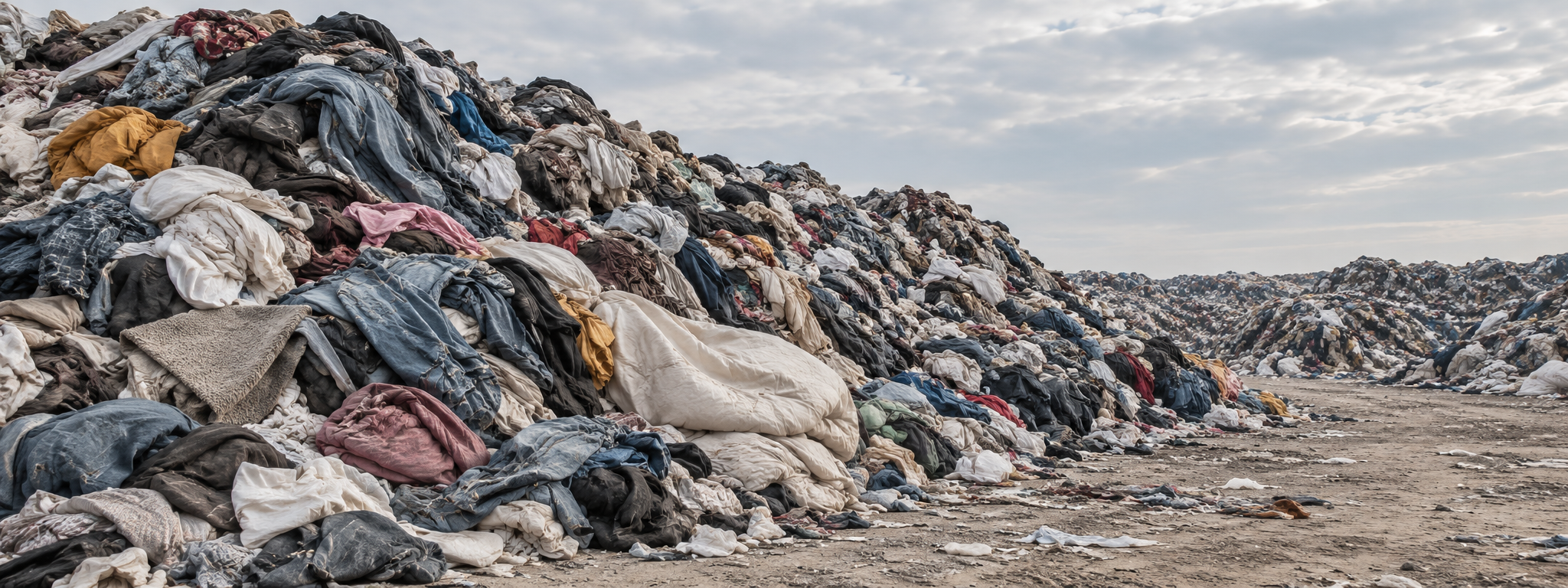
tonnes of textile waste in India (7.073 million tonnes).
Source: Ministry of Textiles / PIB, 10 March 2026 ↗01 / Where waste begins
From the factory floor
to the wardrobe.
India’s 2026 mapping study estimates that manufacturing contributes 42% of textile waste and post-consumer disposal accounts for 58%.
Pre-consumer 42% · Post-consumer 58%
Source: Ministry of Textiles / PIB, March 2026.
Pre-consumer textiles
Cutting scraps, production offcuts, and rejected fabrics arise before a product reaches its user. Keeping these streams separated helps preserve their potential for reuse and recovery.
Post-consumer textiles
Clothing and household textiles become waste after use. Their next route depends on condition, fibre composition, contamination, and the requirements of the receiving process.
02 / Keep the highest useful value
Repair. Reuse. Recreate. Recover.
Recycling is one part of the response. Keeping a usable garment in service can come before breaking it down into material.
Extend product life
Assess whether a garment can be repaired or used again. REBOTX offers repair services for fashion brands, retailers, and manufacturers.
Create a new purpose
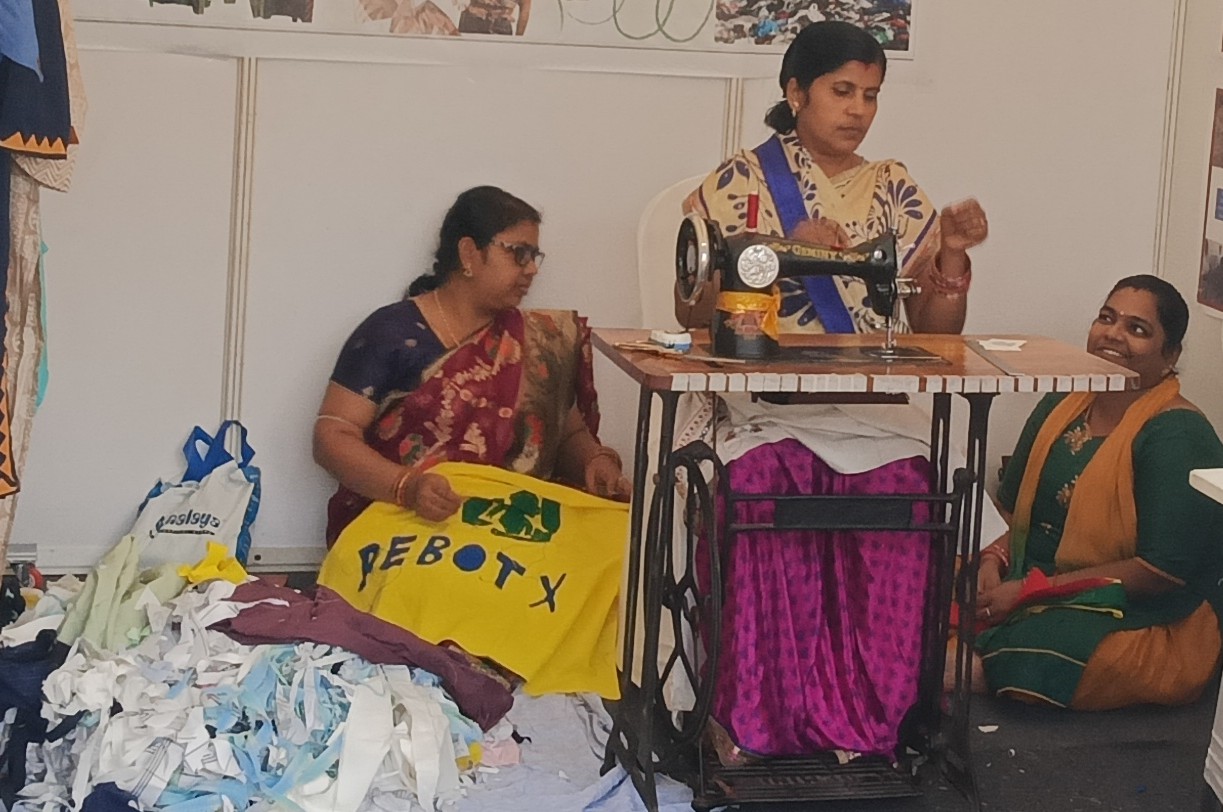
Suitable fabric can be redesigned into products and accessories. REBOTX works with textile reuse and craftsmanship to create upcycled products.
Recover material value
When a textile is unsuitable for direct reuse, an appropriate recycling route may recover useful fibre or feedstock. REBOTX’s fibre recovery offering is planned for future development.
03 / How recycling works
Better sorting.
Better material decisions.
Identify & segregate
Sorting by composition, colour, condition, and end use helps match a waste stream to a suitable recovery process. Blends and unknown materials need additional assessment.
Prepare & process
Mechanical recycling opens prepared textiles into fibres. Other recycling processes target specific material chemistries. A suitable route depends on the feedstock and the intended output.
Match the next application
Recovered material must meet the requirements of its next user. Not every textile becomes new clothing; fibre quality and process compatibility determine viable applications.
REBOTX · FUTURE DEVELOPMENTBuilding towards
Building towards
market-ready recovered fibres.
Through our proposed CTIGS initiative, we plan to develop segregated recycled fibres aligned with market and buyer specifications, alongside green skilling programmes.
Why local collaboration matters
The Ministry of Textiles’ 2026 report identifies opportunities for recycling closer to textile waste sources. It also reports that more than 70% of India’s textile waste already enters recovery pathways, including reuse, recycling, upcycling, and downcycling.
Our focus is to build on that ecosystem through collaboration with material suppliers, buyers, technology partners, and investors. Recovery figures cover several routes; they do not all represent fibre-to-fibre recycling.
04 / Take the next step
Turn the challenge
into a collaboration.
Discuss repair needs, upcycled products, CSR projects, or future recycling partnerships.
Make an enquiry ↗Explore investment partnerships ↗Sources & context
- UNEP — International Day of Zero Waste statement, 27 March 2025. Source for the global annual estimate.
- Ministry of Textiles / PIB — Mapping of Textile Waste Value Chain in India, 10 March 2026. Source for India’s annual generation estimate, waste-stream shares, recovery context, and local recycling opportunity.
These estimates use different reporting scopes and dates and should not be treated as a direct global-to-India comparison. Industry estimates are not measurements of REBOTX’s own impact. Green skilling and segregated recycled fibre supply are future plans.